From the Newsletter
The Token Exchange
AI usage is starting to behave less like software consumption and more like a market with exchange rates.

Tokens are becoming money. Not the metaphorical kind. Inside companies the token is starting to behave like a unit of account, a budget line, and a rationing mechanism.
That sounds strange if you still think of AI usage as software usage. It sounds a lot less strange once you have spent time with the cloud bills.
A Claude token is not the same as a Gemini token. A frontier-model token is not the same as a cheap routing-model token. A token with enterprise data access is not the same as a token sitting in someone's personal account.
Same word. Different purchasing power.
Every AI platform already has exchange rates. We just have not been describing them that way.
NVIDIA put it in plain language in its own explainer, What Are AI Tokens. The goal, it wrote, is "the fastest processing time and lowest cost per token" to optimize infrastructure and maximize revenue. That is market language sitting underneath developer language.
The real rate was never dollars per million tokens. One model is cheaper but needs more retries. Another costs more but lands the answer the first time. One provider has better latency for a workflow, another gives you more context. The number that actually matters is dollars per useful answer, dollars per completed workflow, dollars per decision you trust enough to act on.
So the question companies ask is about to change. Not "how much did we spend on tokens," but which token was worth spending.
The first token market will be internal, and it will look like every budget fight you have ever seen.
A central AI budget gets split across teams. Product wants more for agentic coding, support wants more for summarization and routing, sales wants more for account research, and the executives want assistants that read everything. Then the limits show up. One team starts rationing while another sits on credits it never used. A new model release moves the quality curve, and a workflow that used to need the expensive model now runs fine on a cheaper one.
That is an allocation problem, and allocation problems are political. Who gets the scarce tokens, and which work earns the expensive model? Nobody runs a desk for this yet, but they are about to need one.
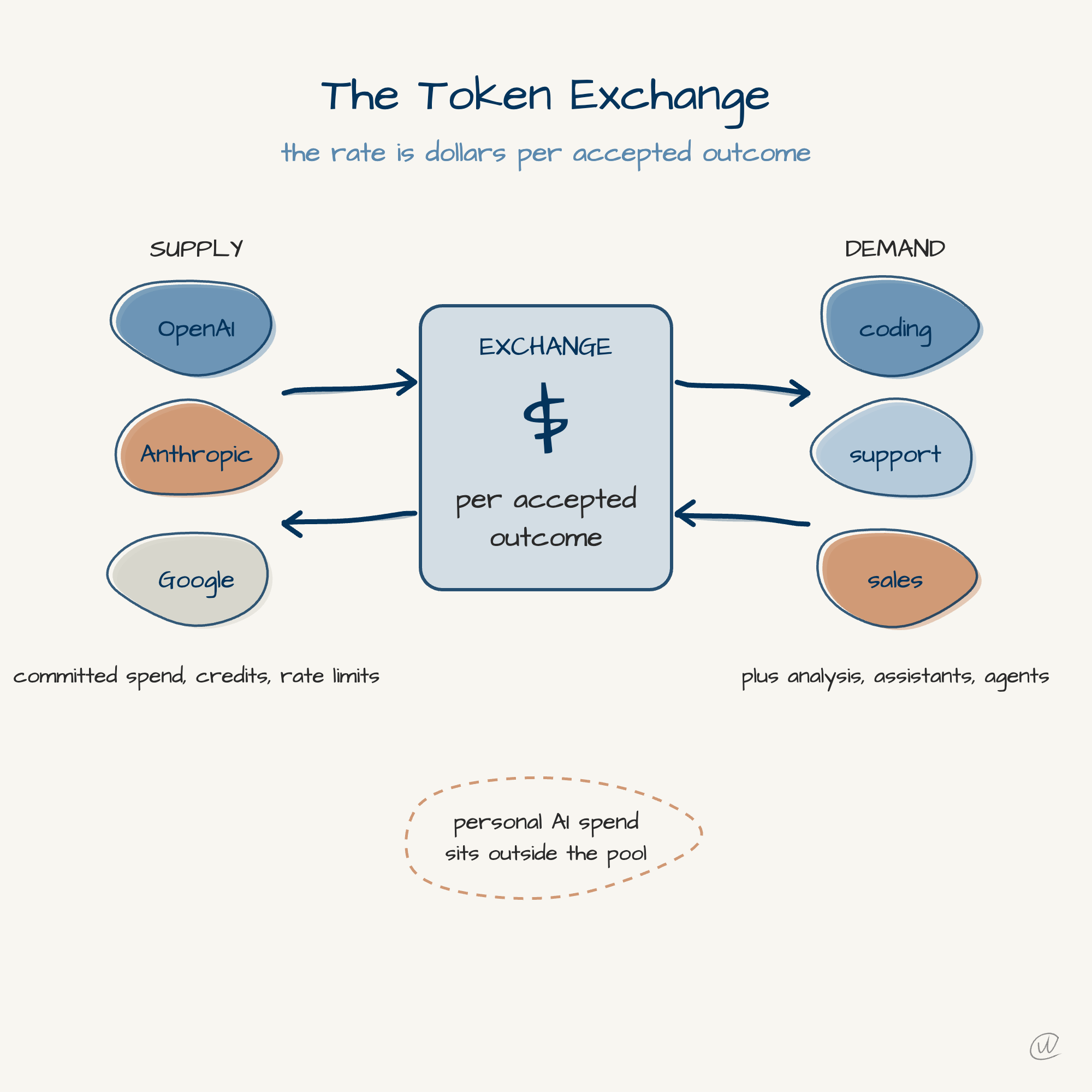
There is a stranger layer underneath the company one. People now carry both personal AI spend and professional AI spend, and they can feel the difference.
An employee knows exactly what their own Claude or ChatGPT subscription is worth to them. Then they come to work and meet a constrained enterprise version with different limits, different model access, and different data rules. So they quietly route their thinking through the personal account, because the personal currency is more liquid. The company believes it is controlling cost while it is actually pushing demand into a shadow market it cannot see.
The token economy will not only run between vendors. It will run through people.
Watch what the AI companies themselves are doing, because it tells you where this goes.
Anthropic is running an Economic Index survey that pays users fifteen dollars for a short interview about how AI is changing their work. They already know you are a user. The fifteen dollars buys economic signal about the work those tokens are reshaping, which is a small version of a larger move. The companies selling tokens are also studying the labor market those tokens are changing.
A real token market needs more than a price sheet. It needs live demand across models and tasks, spot pricing next to committed-use pricing, a way to compare output quality, routing data that shows where cheap tokens are good enough, and governance, because not every token is allowed to touch every dataset.
Put that together and token management stops looking like SaaS administration and starts looking like treasury. An AI team that manages exposure across providers, routes workloads by effective exchange rate, and optimizes for cost per accepted outcome is doing the job a treasury desk does with currencies.
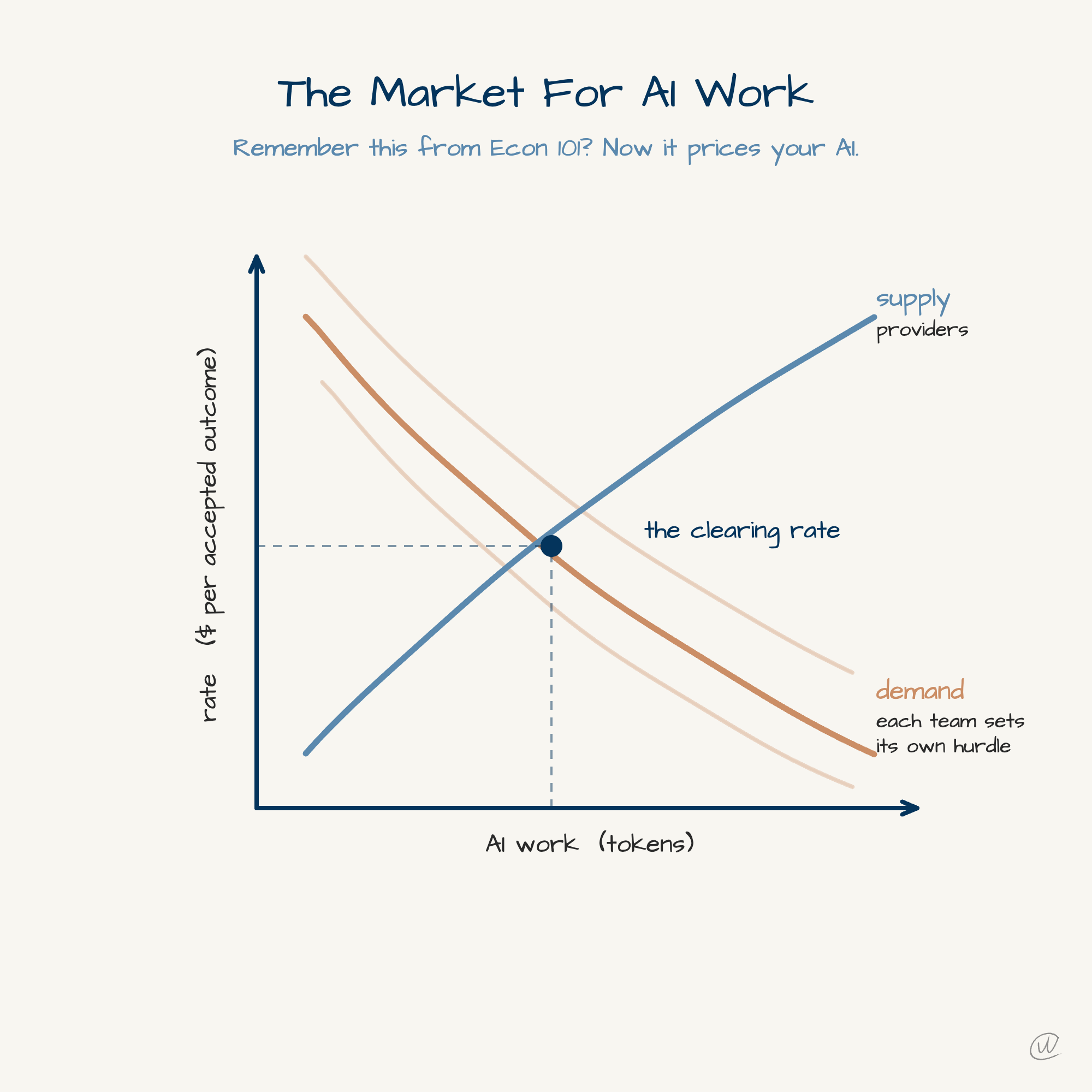
Supply slopes up, demand slopes down, and they cross at a price. For AI work, demand stops being one curve. A board deck and an internal status update do not deserve the same model, so every team brings its own hurdle for what an accepted outcome has to clear, and demand gets prescriptive about which tokens are worth buying.
Most companies still track tokens the way they track a phone bill, one number at the bottom. The ones who learn to price, route, and ration them will spend less and ship more.
Get More Where This Came From
Weekly AI frameworks and data strategy for people who have to make the call.