From the Newsletter
AI Is the Surface
The MCP Debate, the Dashboard Problem, and the Open Source Turn Are One Story

I am writing this post by talking to Hermes, an agent I set up on my own machine. I talk, it writes.
The way I am writing it is the argument.
No app. No dashboard. No screen a product team built two years ago, guessing what I would need today.
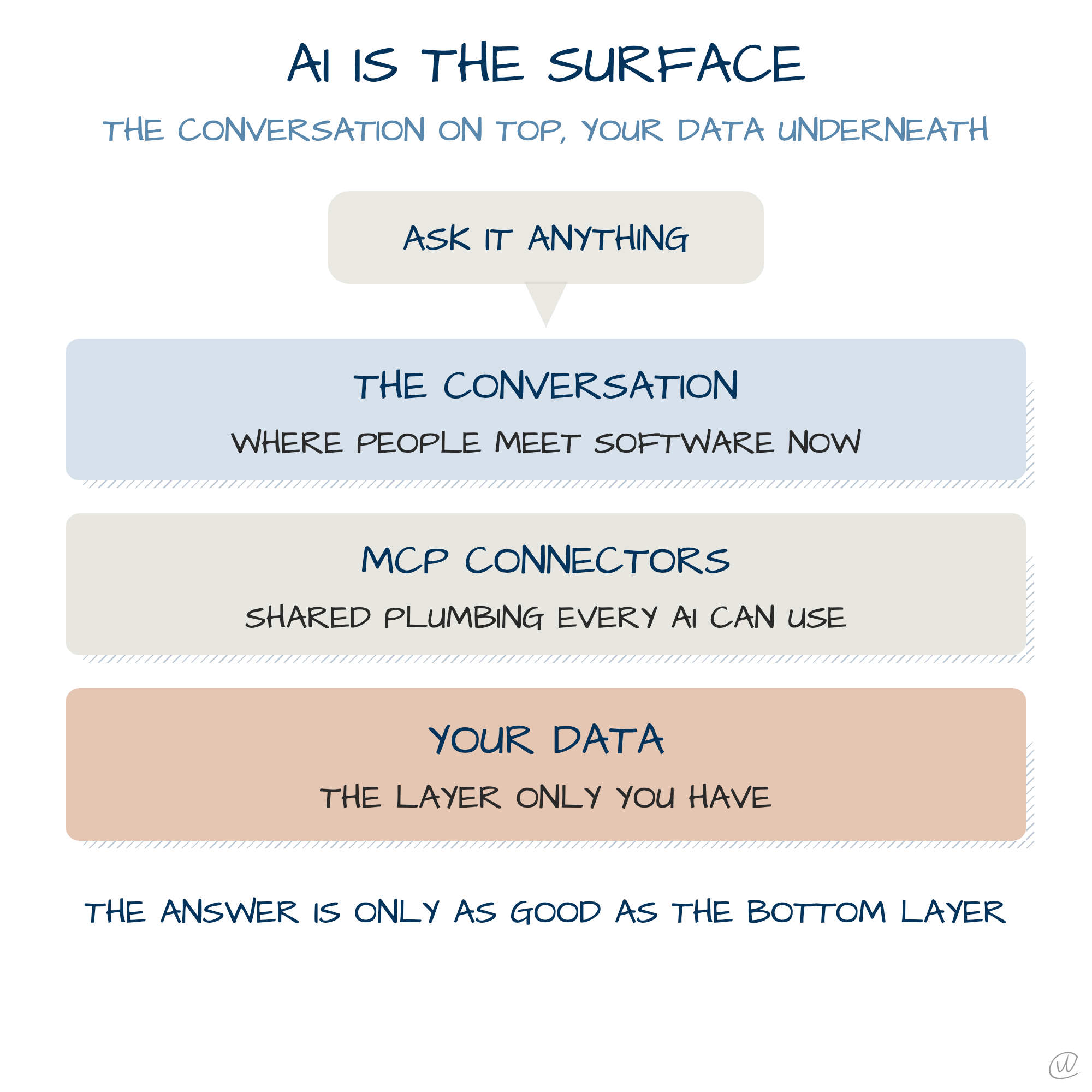
There is a lot of debate right now about whether MCP is the right level. Whether customers and businesses can realistically wire up their own connections, since plenty of them are not at the level of coding up their own things.
That barrier comes down quickly as people get more exposure. It was never really the issue.
Where this heads is that businesses build AI that leverages multiple MCPs. Their own, their vendors', their partners'. The plumbing is already reaching normal users too. Claude artifacts can now call MCP connectors, so a small app can fetch information and take actions for each viewer on demand.
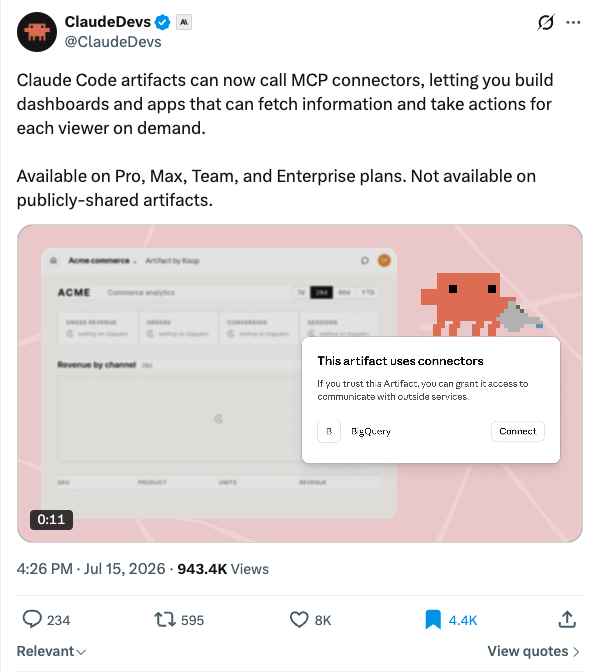
When every company can call the same connectors, the connectors stop separating you.
The data surface is still the real advantage for most companies.
If I am a marketer selling to roofing companies, I have to understand how roofers actually work. They are in the field all day, doing estimates and repairs. A roofer halfway up a ladder is never going to deal with an MCP.
But there is an entire process where that same roofer would love to talk to an AI.
I watch the same divide in my meetings. The people in the room who have set up an OpenClaw or a Hermes get it immediately. The people who have not are still staring at the setup, and the setup is a big barrier to understanding how easy all of this is once it is running.
We have been watching this adoption timeline for a couple of years.
People built their own dashboards, ones they were comfortable with. Then they learned what most dashboards and most software eventually teach you. They are far too rigid for how fast data is changing. And mixing and matching data across sources makes the classic dashboard incomplete the day it ships.
I wrote about software dying last fall, and in April I argued the API is the UI now. This is the same line, extended one more step.
Although people still need apps, they probably don't.
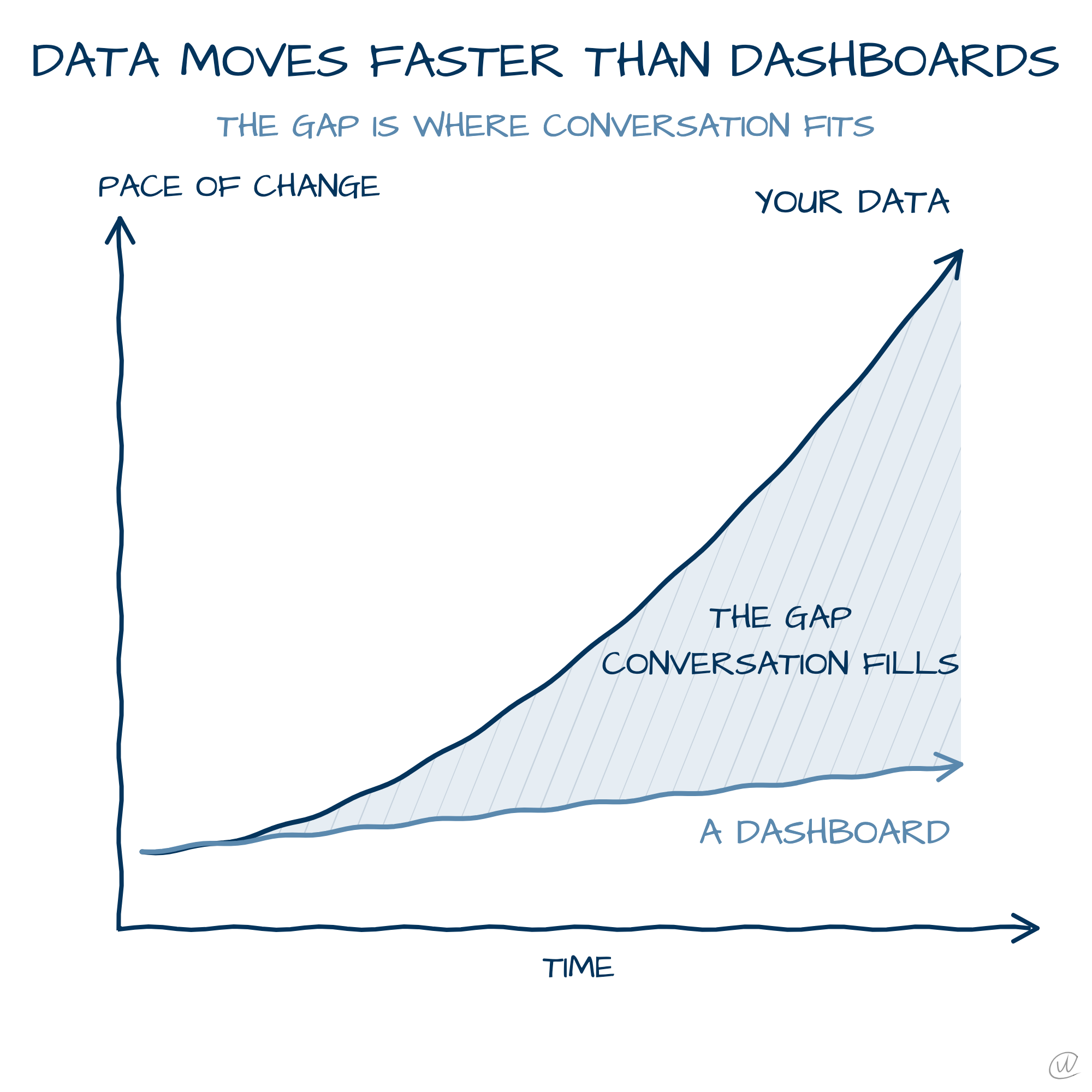
People who have tried Claude or Hermes start to see a real opportunity around conversation here. I do not think everyone else has seen it yet.
Now tie that to what happened this week in open source.
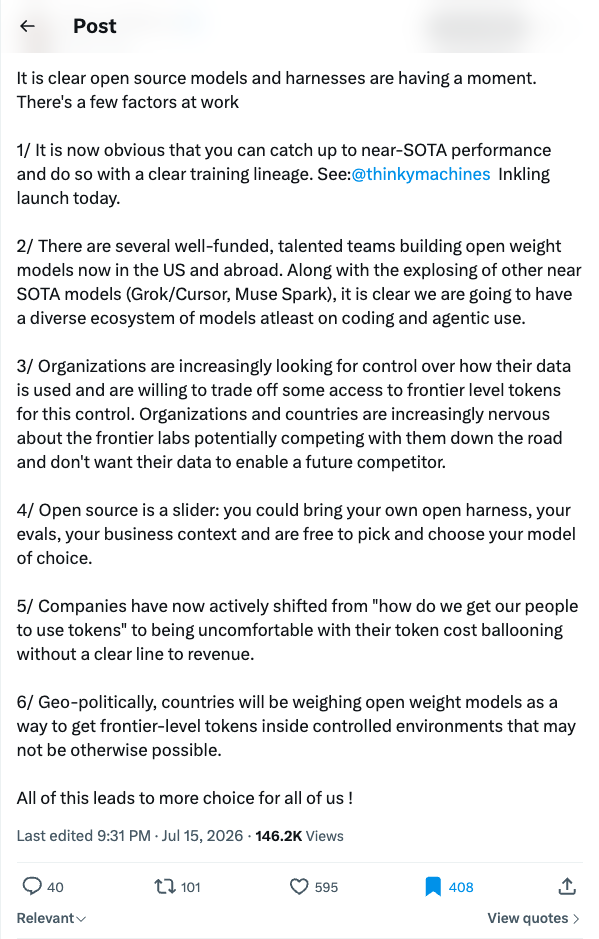
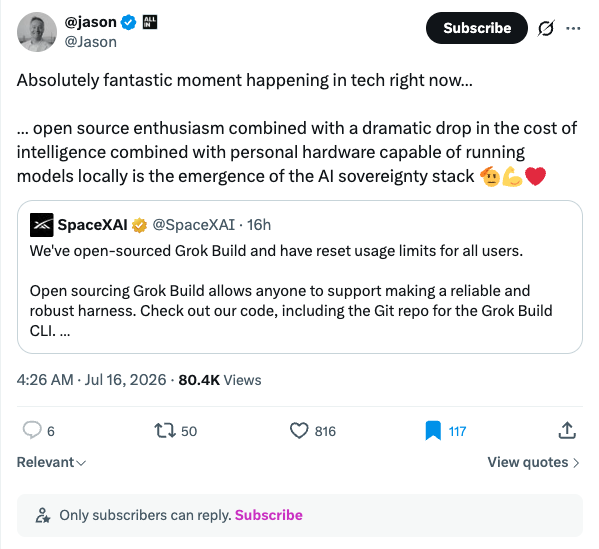
Thinking Machines launched Inkling. Full weights, multimodal reasoning, and the ability to fine-tune it into something specific. SpaceXAI open-sourced Grok Build. Muse Spark is out. Sriram Krishnan counted the reasons in one thread. Near-SOTA performance with clear training lineage. Organizations that want control over how their data gets used. Token costs ballooning without a clear line to revenue.
Jason Calacanis rolled it into one phrase, "the AI sovereignty stack." Open source enthusiasm, a dramatic drop in the cost of intelligence, and personal hardware capable of running models locally.
I would add one more reason. Companies are going to lean toward open models created, trained, tuned, and provided out of countries aligned with their own, or with a similar international relationship. Model choice is turning into a question of where you sit and who you trust.
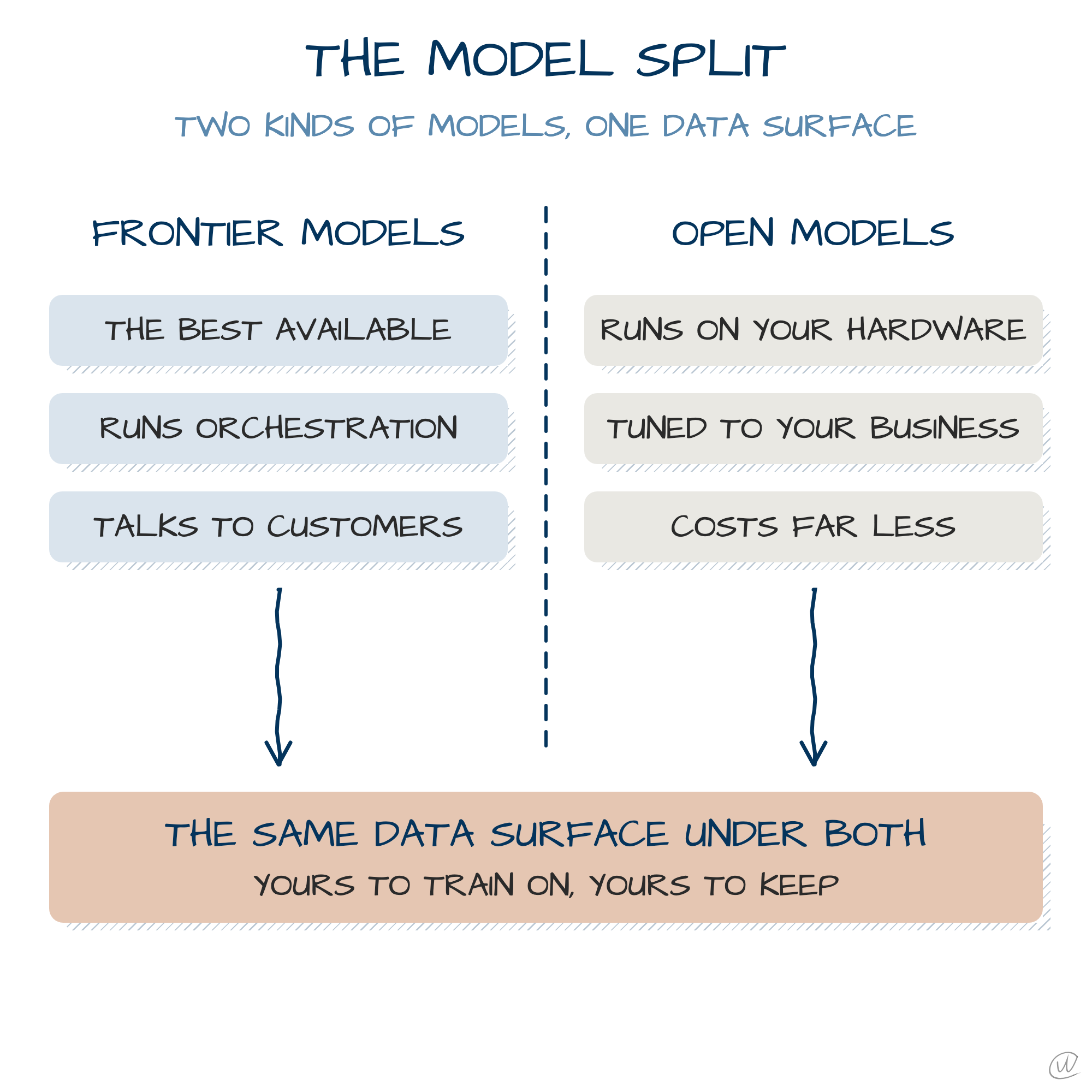
So picture the split. Frontier models for orchestration and customer service, where you want the best available. Open models on your own hardware for everything close to the core, trained to focus on your own things, and they save you real money because the hardware is yours.
I think that is what starts to happen, quickly.
The roofer is never going to open your dashboard.
He is going to ask, and an AI is going to answer, through whatever mix of models and connectors his suppliers wired together while he was on the roof.
Whether that answer is any good depends on the data it stands on. That part has not changed, and I do not think it will.
Get More Where This Came From
Weekly AI frameworks and data strategy for people who have to make the call.