From the Newsletter
Early and Optimistic
Two Things to Keep in Mind as AI Agents Take Shape

Love this visualization shared by John LeFevre on X.
84% of people on the planet have never used AI.
Not "haven't used it well" or "tried it once."
Never used it.
Only 0.3% pay for a subscription.
And the number of people using coding scaffolds like Claude Code or Cursor? Roughly 2 to 5 million out of 8.1 billion humans.
That is 0.04%.
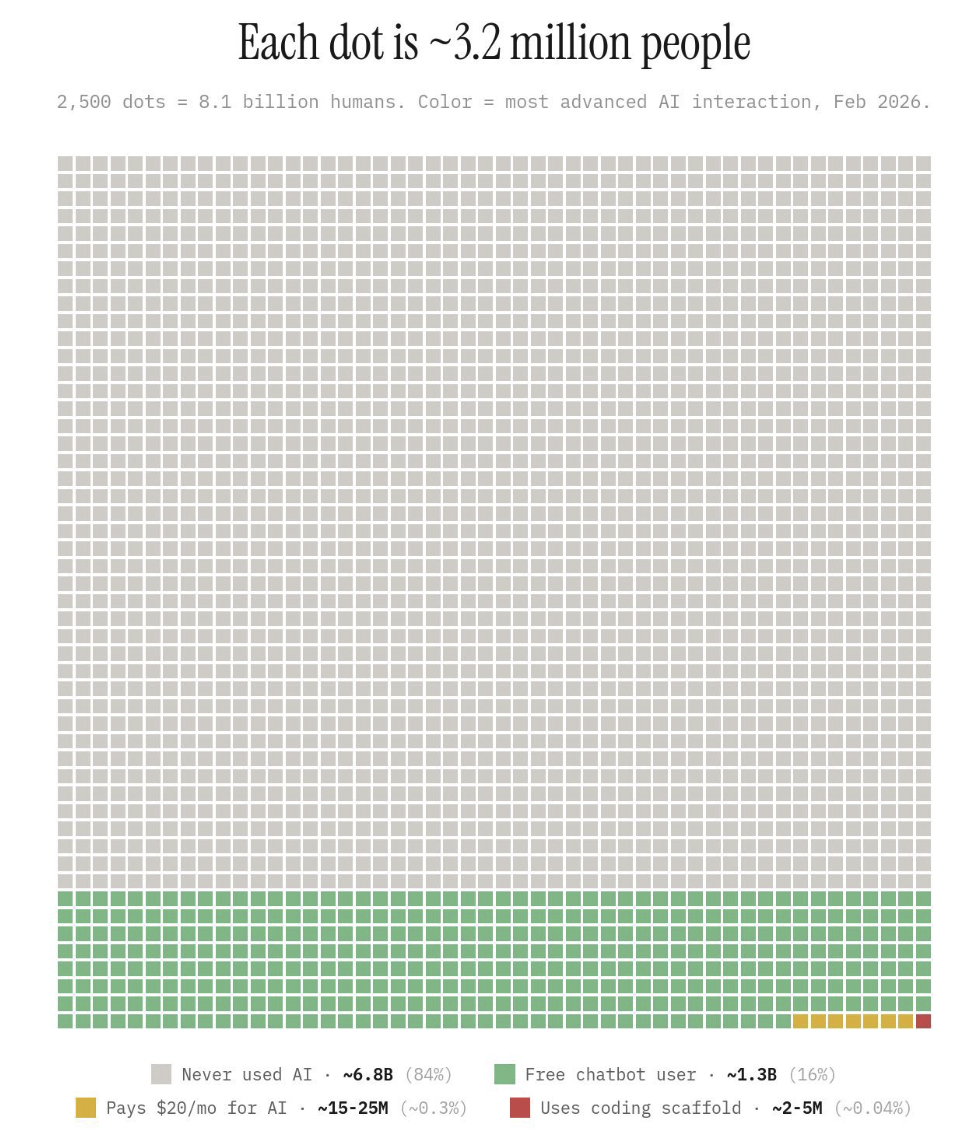
If you are reading this newsletter, you are in the fraction of a fraction.
And if you have built anything with an AI agent, you are in the sliver of the sliver.
It is like being a sports fan whose team just made the championship. You are completely consumed by it. Every conversation, every meal, every group text is about the next game.
Meanwhile, the rest of the world moved on to the next season three weeks ago.
When you are in the middle of something, you forget how few people are actually in the room.
I have lived through enough of these cycles to recognize the shape.
Cabbage Patch Kids. Pokemon. The dawn of the internet, when I was absolutely certain everything would happen overnight. It didn't. The dot-com era took a full decade to find its footing after the crash.
Webvan, the original grocery delivery startup, collapsed in 2001. It took another fifteen years before Instacart and Uber Eats made the same idea work at scale, with completely different infrastructure underneath.
And even now, with every delivery app imaginable a tap away, my wife and I still go to the grocery store. It is part of our routine. We enjoy the process. That human element is not going anywhere, no matter how many apps try to replace it.
Another article in my feed this weekend, juxtaposed against the "it's early" data, was so serendipitous.
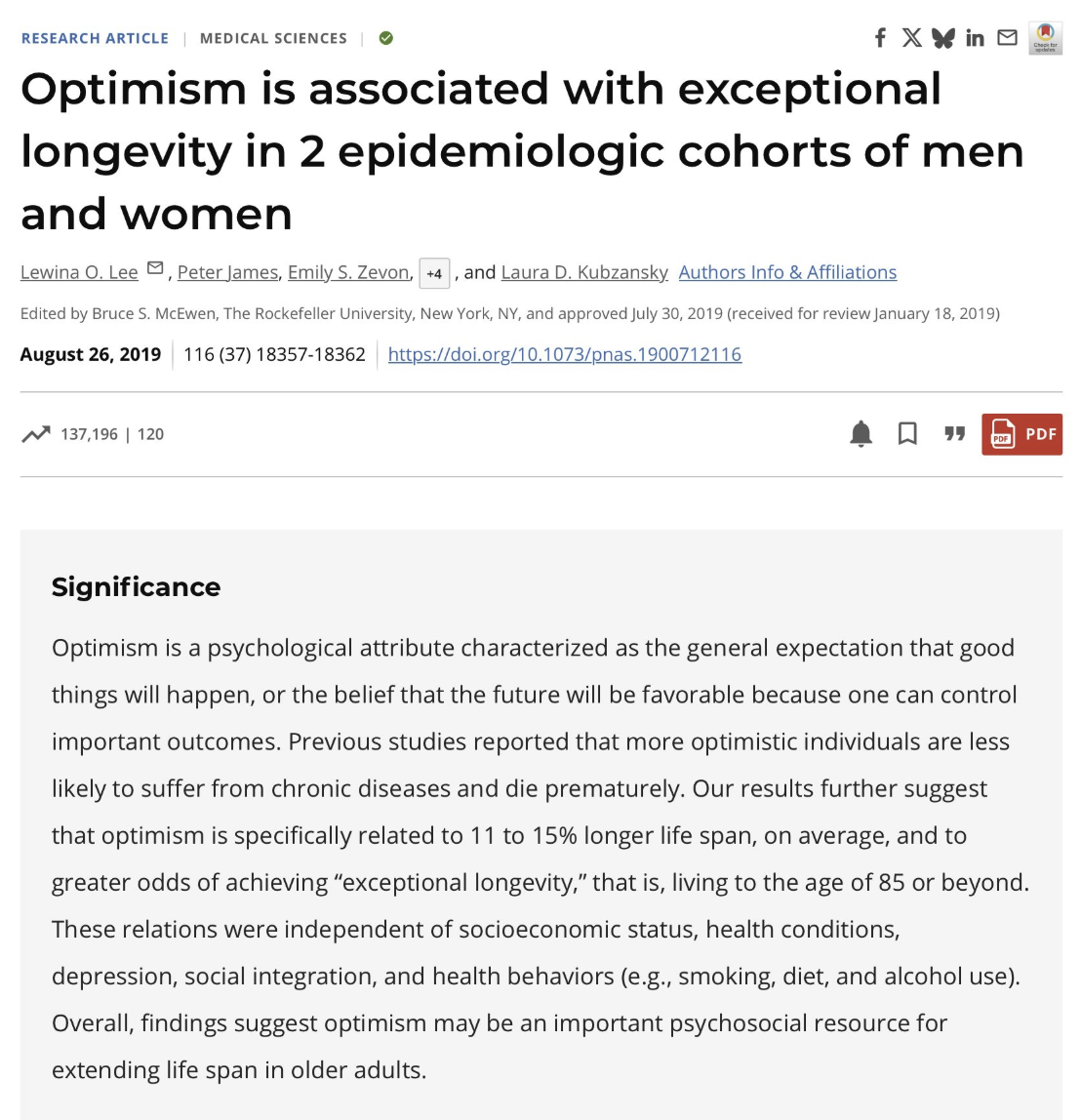
A 2019 study in Proceedings of the National Academy of Sciences by Lewina O. Lee and colleagues at Harvard and Boston University found that optimism is specifically related to 11 to 15% longer life span, on average, and to greater odds of achieving "exceptional longevity," defined as living to 85 or beyond.
The study followed two large cohorts, the Nurses' Health Study and the Veterans Affairs Normative Aging Study, over decades of data.
The part that stops you cold.
The researchers controlled for socioeconomic status, health conditions, depression, social integration, and health behaviors like smoking, diet, and alcohol use. The effect still held. As Aakash Gupta pointed out on X, this means optimism itself, independent of whether you eat your vegetables and hit the gym, correlates with a longer life.
Peer-reviewed. 137,000 views. 120 citations.
I wrote about a related idea last fall in SEO Cannot Be Pessimistic by Definition.
Hans Rosling proved in Factfulness that the world improves when we measure reality rather than accept pessimistic narratives. It is easy to scroll through AI headlines and feel like the sky is falling. Rosling would tell you to look at the data instead.
Tim Urban framed this tension on X. His famous 2015 Wait But Why graph about the intelligence explosion is "playing out in real time," as he put it.
His graph does not start with early LLMs. It started 4 billion years ago with the origin of life. What is happening now is big.
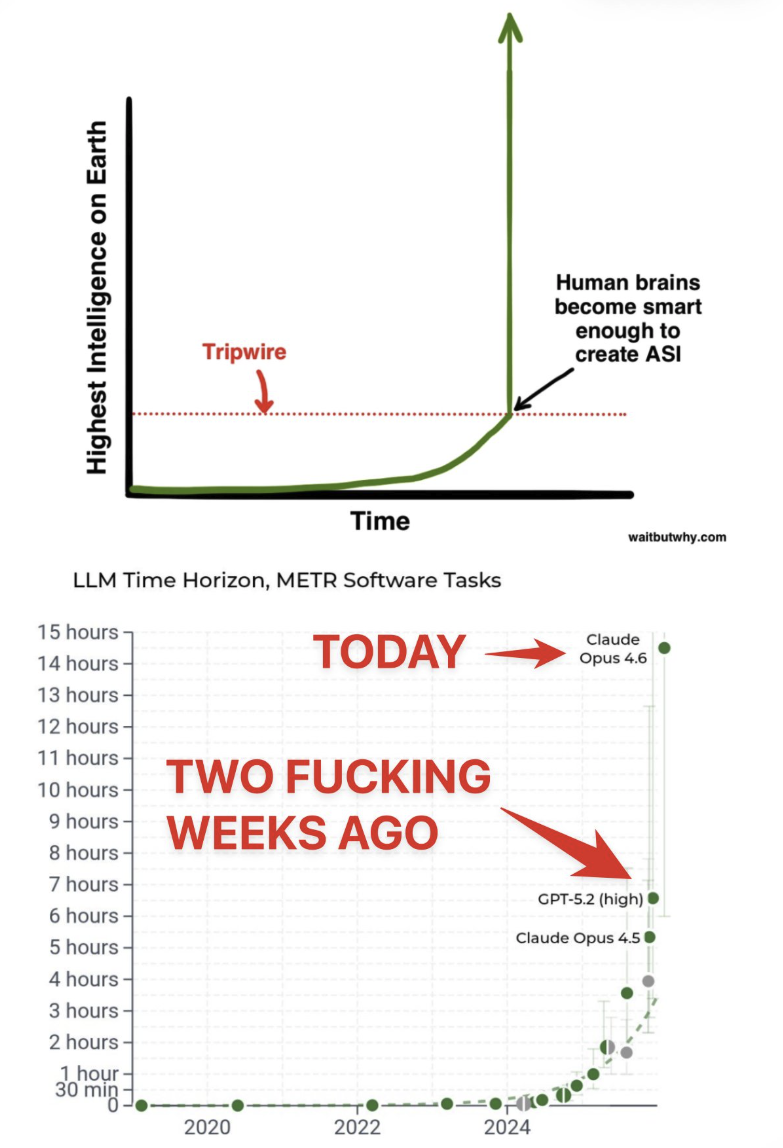
The METR benchmark for the last few weeks really shows this curve.
Claude Opus 4.5 could sustain roughly 5 hours of autonomous software work. Claude Opus 4.6, released two weeks later, jumped to 14 hours. A capability doubling in fourteen days.
Even as we watch new hardware take shape, like the rumored smart speaker from Jony Ive and Sam Altman, the adoption timeline will still stretch longer than the tech press predicts. It always does. The technology jumps fast. The humans take their time.
I am still building out my Claude assistant, Clio.
She can do three more things this week than she could last week.
She processes my voice notes, organizes my reading, and now drafts responses to things I flag throughout the day. It is frustrating when things break, and I have to debug them. But that frustration is the learning curve.
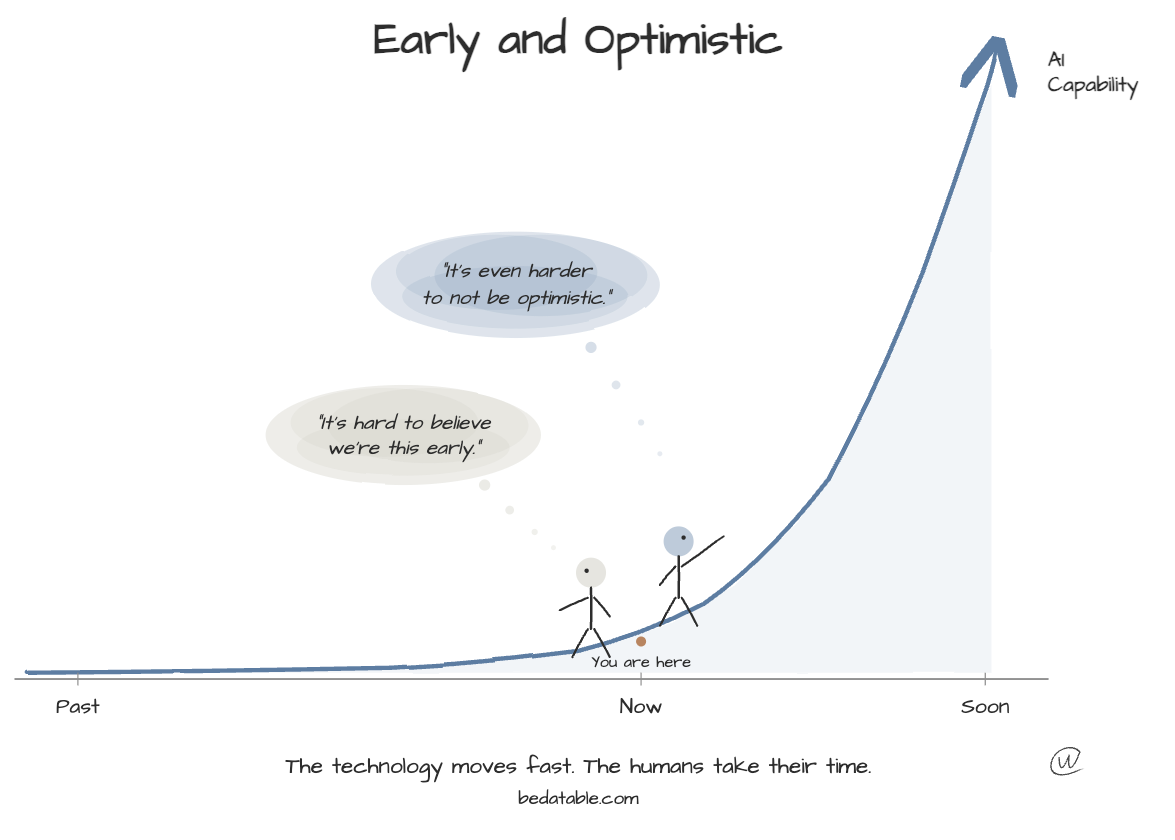
The people who push through it build an understanding that compounds, week over week.
I wrote about this compounding effect in The Broken Pool Cue. The technical barriers have fallen. What remains is willpower.
Be patient, but recognize how fast the pieces are moving.
Be optimistic, because the research says it will literally add years to your life.
And be curious enough to keep experimenting, even when the tools fight back.
We are early. That is not a warning. It is an invitation.
Get More Where This Came From
Weekly AI frameworks and data strategy for people who have to make the call.


