From the Newsletter
Stated Preference, Revealed Preference, and AI Memory
What people say they want, and what their clicks show.

Yesterday, I bookmarked Google's announcement on X. Publishers can now add a Preferred Sources button to their pages. Click it and you tell Google that you want to see more from that site.
As News from Google shared on X.
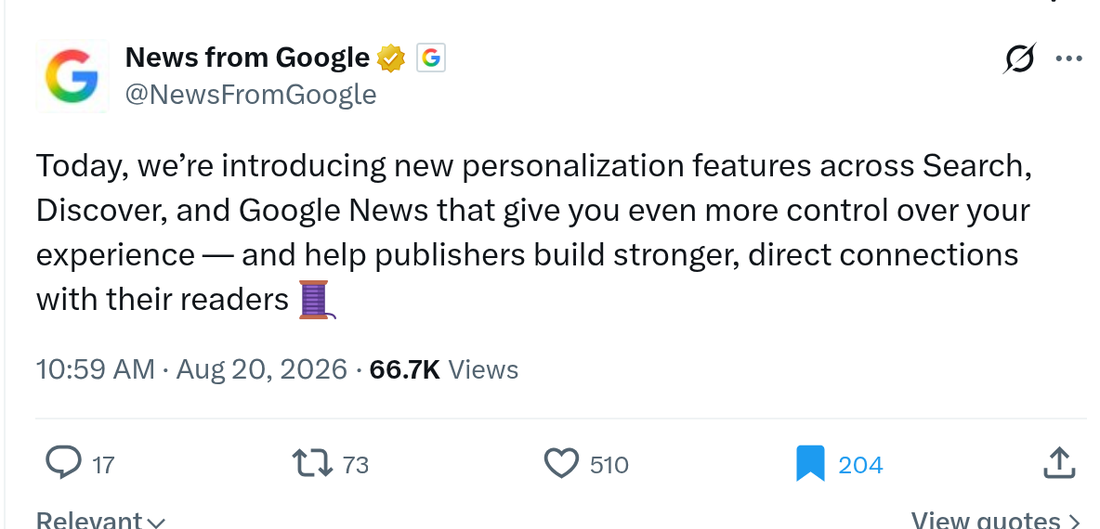
Google says more than 600,000 unique sources have already been selected. Preferred sites can appear more often in Top Stories, AI Overviews, and AI Mode. A related control coming to Discover lets people type which topics or links they want to see more or less of. The feed adjusts and remembers.
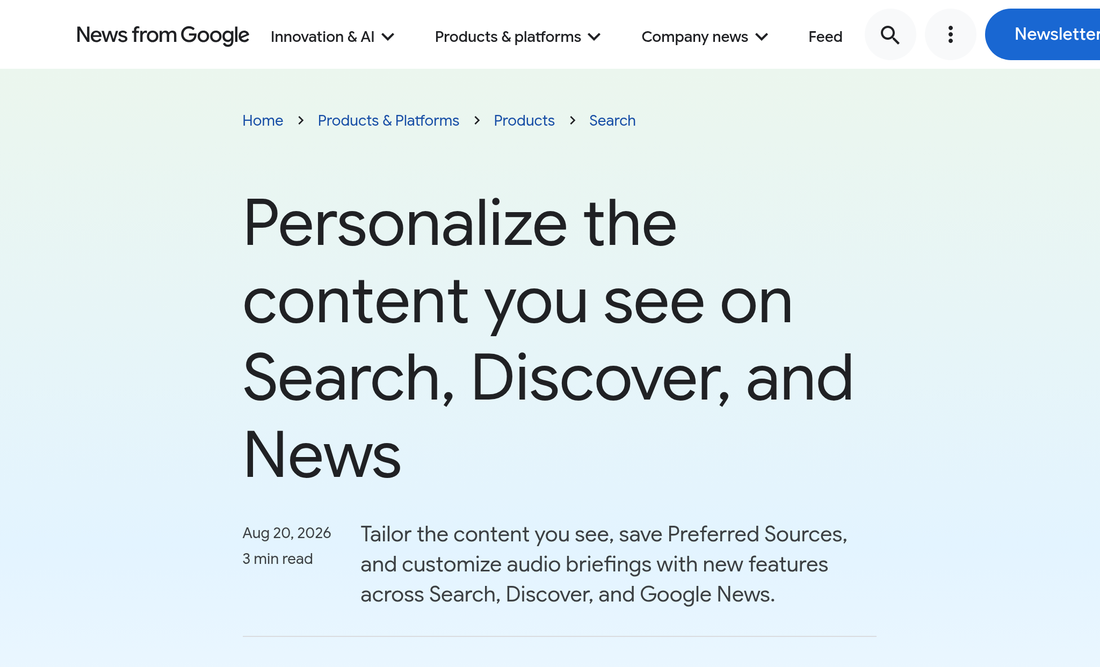
That gives Google a direct declaration of taste. I choose a source and say, in effect, I prefer this.
Then I go back to searching and clicking, and what I actually read may tell a different story.
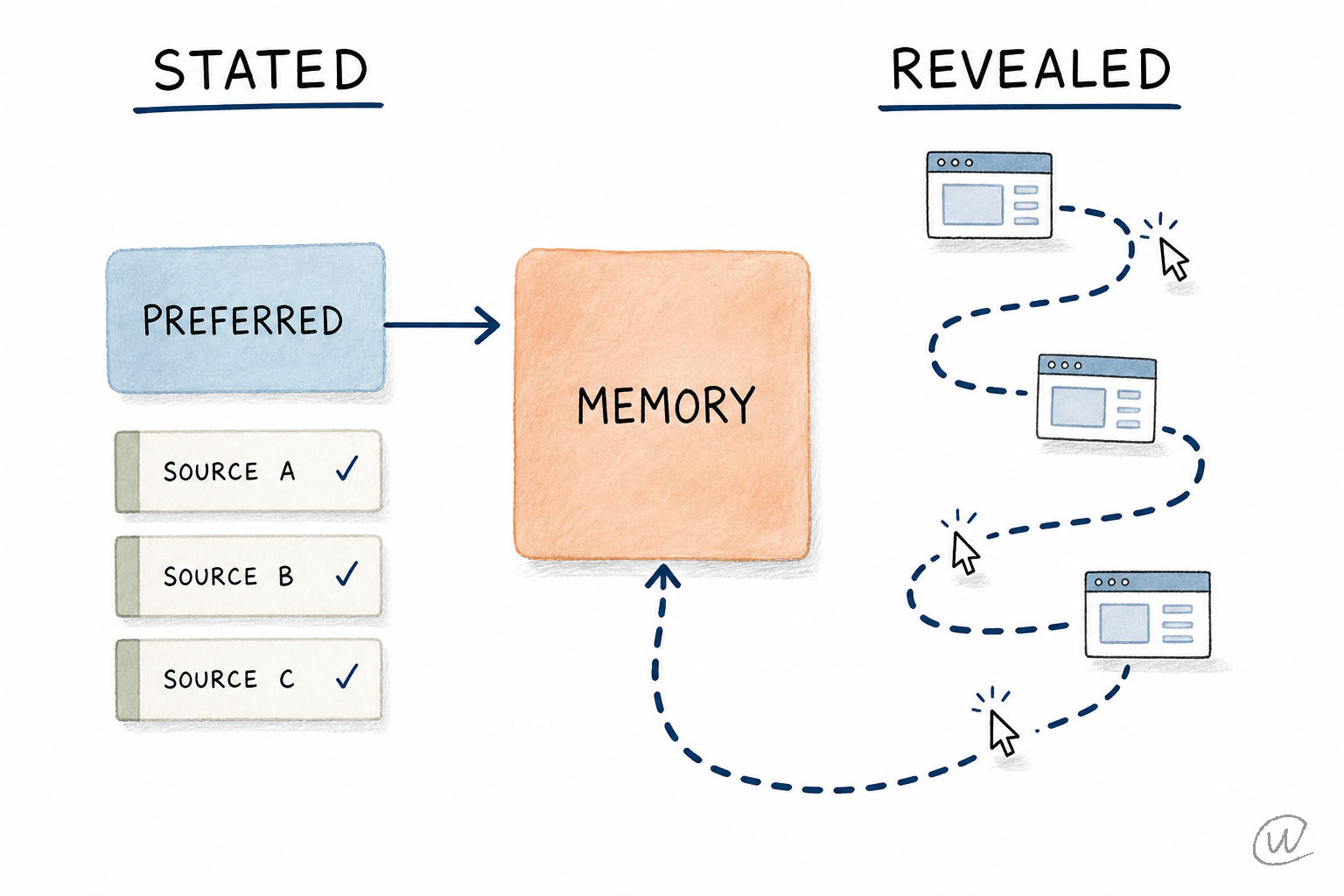
Economists have studied this gap for nearly ninety years. Stated preference is what someone says they want. Revealed preference is what their choices show when something is at stake.
Paul Samuelson formalized revealed preference in 1938 and developed it again in 1948. His claim was that we can infer preference from choices rather than talk. A survey records what I say I would buy. The market records whether I hand over the money.
Revealed preference still needs care. John Beshears, James Choi, David Laibson, and Brigitte Madrian showed why a choice does not automatically reveal what is best for someone. The choice may be passive, complex, unfamiliar, heavily marketed, or separated from its consequences by time.
Digital privacy research gives us a more recent example. In an experiment by Susan Athey, Christian Catalini, and Catherine Tucker, stated concern about privacy gave way when small incentives or navigation costs entered the decision. Daniel Solove has argued that this gap often reflects cost and context rather than hypocrisy.
People share more with AI than they type into a single-line search, and they often do not realize they are adding context. Some of that context can become memory.
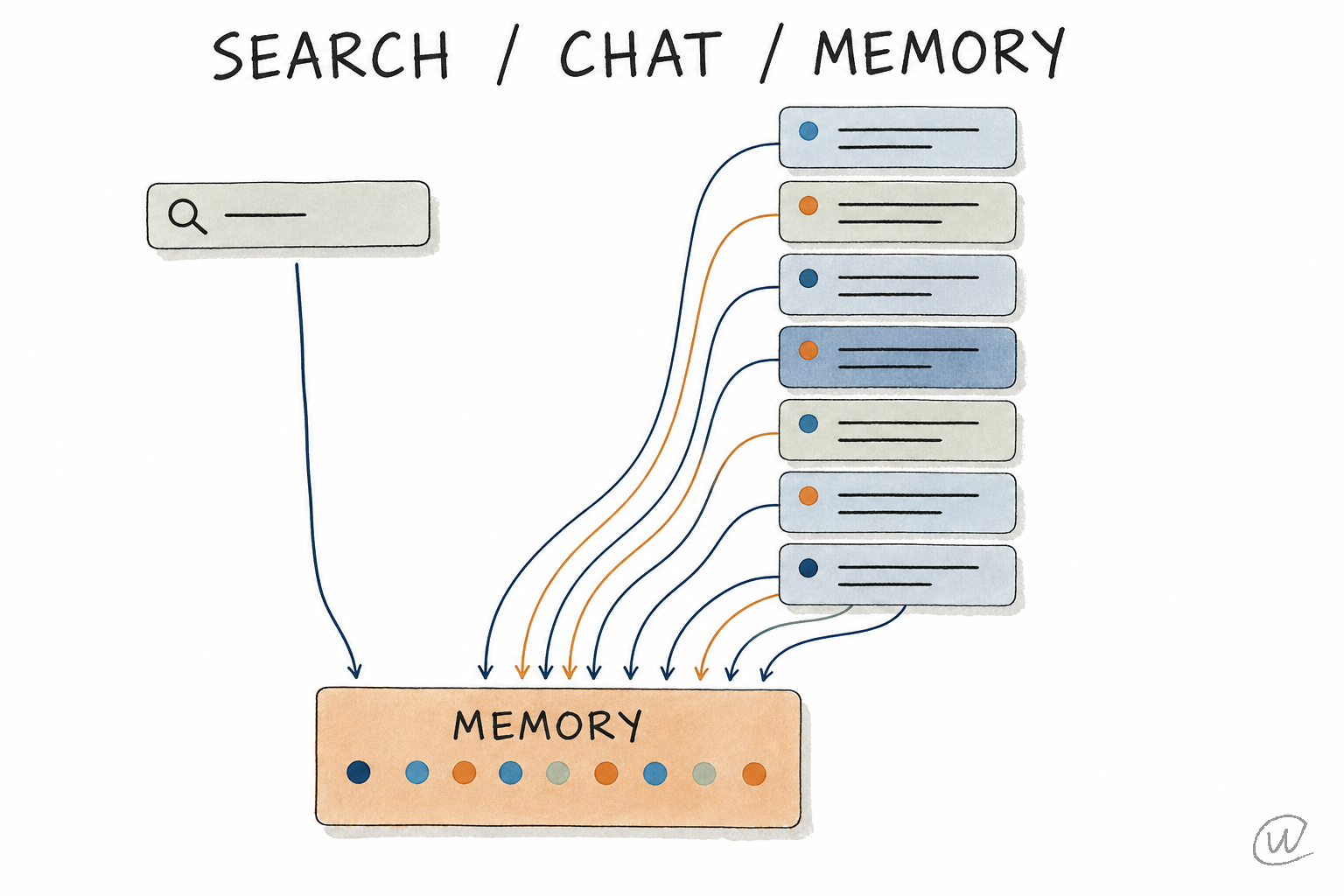
I have written before about why memory needs to forget and why AI memories need an expiration date. A memory can accurately preserve what I preferred last August and still be a poor guide to what I will choose today.
Once an assistant can follow more of the chain, it has to decide when a preference has gone stale, when behavior changed because of friction, and how much weight each signal deserves.
I have no problem with people stating their preferences. People are going to consume content the way they want, and a button that lets someone support a source they value is a reasonable product choice.
The filter bubble question has been with search and feeds for years. Accumulated preferences can reduce the number of unfamiliar sources that get a chance to appear. More memory and context can make the experience feel personal while carrying yesterday's preferences into tomorrow's answer.
Google is trying to understand demand for different content sources and how to cite them. Preferred Sources gives people a direct way to express that demand. The question I keep coming back to is how memory should respond when the declared preference and the later behavior diverge.
An assistant that remembers the conversation and follows the work can treat preference as a moving relationship among what I click, buy, pay for, and choose over time. That could produce a deeply personal experience. It could also turn a temporary pattern into a lasting assumption about me.
I want memory to learn without becoming a filter bubble of one.
Get More Where This Came From
Weekly AI frameworks and data strategy for people who have to make the call.


