From the Newsletter
Comics, Algebra, and Our Kitchen Table
When AI stopped being "what dad does at work" and showed up at the kitchen table.

While each of my kids has some vague idea of what I do for a living, it was fun this last week to see it crossover into their lives.
My oldest is in college and edits this newsletter, so whether she likes it or not she's absorbing everything I write about on a weekly basis.
She's shown genuine interest and knows how fast the tools are evolving.
My 11-year-old had a school project where he could build whatever he wanted.
He chose a comic book. He'd already drawn the characters. A robot with a blue energy core and a triangular visor and a villain he won't let me share here cause it's so good.
He knew exactly what each character's personality was, the bully, the hero, and he had the first several panels mapped out in his head before he picked up a single colored pencil.
He just didn't know how to get it out of his head and into a finished product.
That same weekend, I signed the younger two up for Math Academy, a platform that teaches math through a knowledge graph of 2,500 interconnected topics instead of the usual Chapter 1, Chapter 2 march through a textbook. (Industrial Age school is so cooked.)
Two projects. One weekend. And a lot of fun for a dad.
As I said, my son was given a project at school where he could work on almost anything and prepare a presentation for his class. He chose a comic book.
The apple does not fall far from the tree on the drawing front.
My son likes to draw and every so often really dives into it. It almost seems like it is a yearly cycle. But when this school project came up, it was a nice way to leverage some ideas he was already working on.
But to help him along, I had AI interview him. He spoke the plot out loud, the way an 11-year-old does, jumping between scenes, circling back, adding details he'd forgotten.
The AI followed along, asked clarifying questions, and organized the narrative into panel sequences.
Then we fed in photos of his drawings and asked the AI to guess each character's personality based on nothing but the sketches.
It nailed the hero, identified the villain, and picked up on the bully's posture.
All from colored pencil on paper.
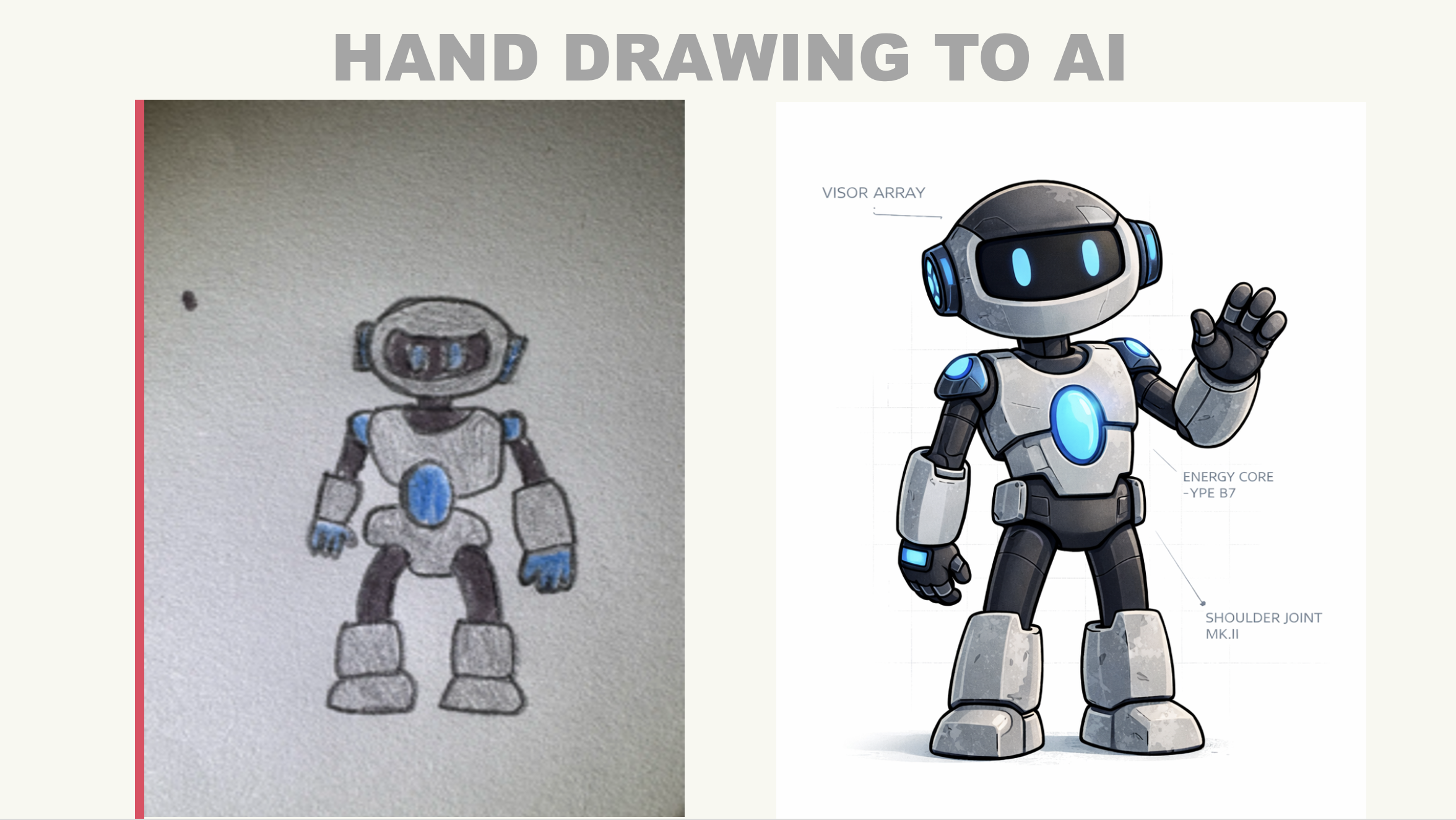
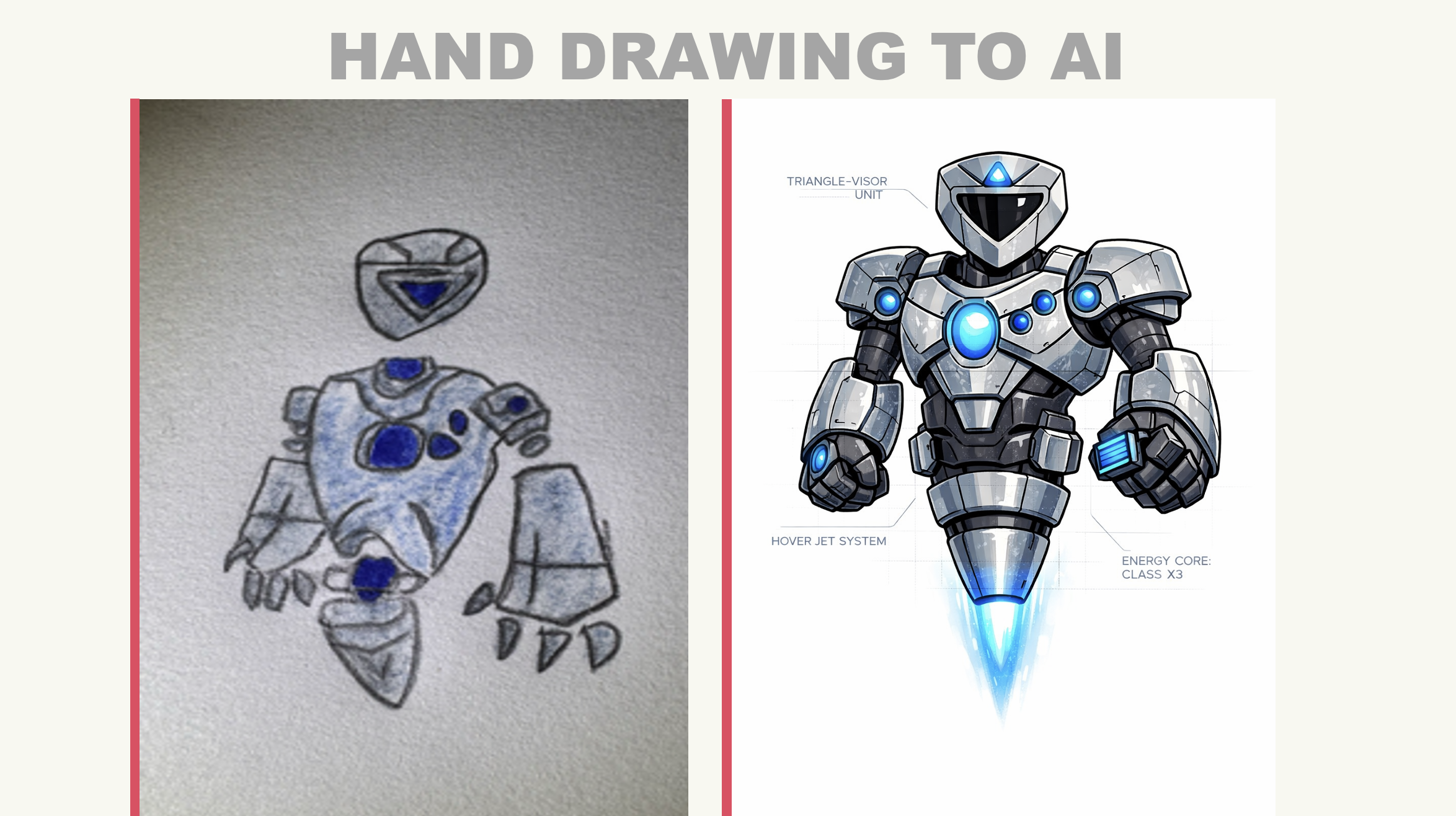
From there, the AI converted his hand drawings into polished character designs. The robot with the oval visor and the energy core became a fully rendered character sheet with labeled components.
The armored bot with the hover jets went from a sketch to something that looked like concept art from a studio.
The AI helped lay out panels, place dialogue, and sequence the story he'd been telling all along.
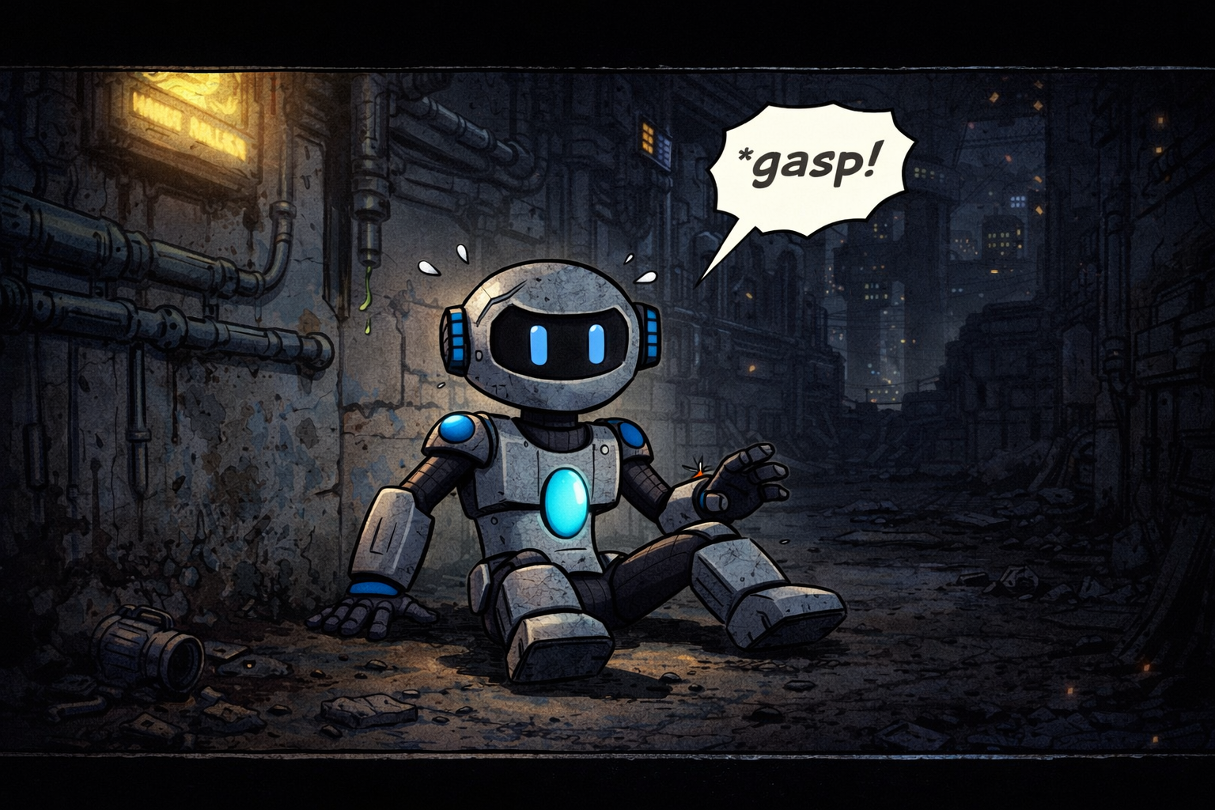

The final output is a real comic book. Panels with atmosphere, battle scenes, and narrative captions.
He has to present the process to his class, and I think his classmates will be more interested in the "how" than the "what."
The project took several weeks. An hour here, an hour there, usually after homework.
The fascinating part was watching him realize he could just talk to the machine and it would understand what he was building.
He didn't ask AI to make a comic book for him. He directed it.
Every character, every plot point, every design choice was his and really fun to watch. I didn't actually know what the plot was until sitting there, and he has a whole three part series in his mind.
I wrote about this kind of shift in "It's Not the Age You Start, It's Just That You Start." Francois Chollet's argument that understanding is self-built, that genuine learning happens through active creation, not passive consumption.
I work with knowledge graphs professionally.
At Yext, I've spent years helping retailers, healthcare systems, and financial services firms structure their data into connected entities that search engines and AI systems can understand.
My wife and kids have heard me talk about this. Endlessly.
I don't think this has ever been especially clear to them why it matters.
Then I showed two of the kids Math Academy and the knowledge graph below.
Math Academy was founded in 2013 by Jason Roberts, who wrote some of the original real-time systems at Uber, and Justin Skycak, a mathematician and ML engineer who hand-built the entire quantitative engine. The Washington Post called it "America's most advanced math program."
It costs $49 a month.
The platform organizes math as a directed graph of roughly 2,500 topics connected by 7,500 prerequisite relationships, spanning everything from 4th grade arithmetic through multivariable calculus, linear algebra, and into machine learning.
Instead of moving students through chapters in order, the system runs a diagnostic assessment. Twenty to sixty questions.
Based on your answers, it infers mastery across 500 to 1,000 topics through graph compression.
If you answer a calculus question correctly, the system can infer that you likely know the prerequisite algebra and arithmetic underneath it.
Then it builds a path that is specific to each student.
If calculus is giving you trouble but geometry clicks, the system routes you through geometry and into calculus by way of the connections between them.
It finds adjacent strengths and uses them as "bridges to weaknesses".
Two students in the same course follow completely different sequences.
I explained this to my kids while showing them the knowledge graph visualization.
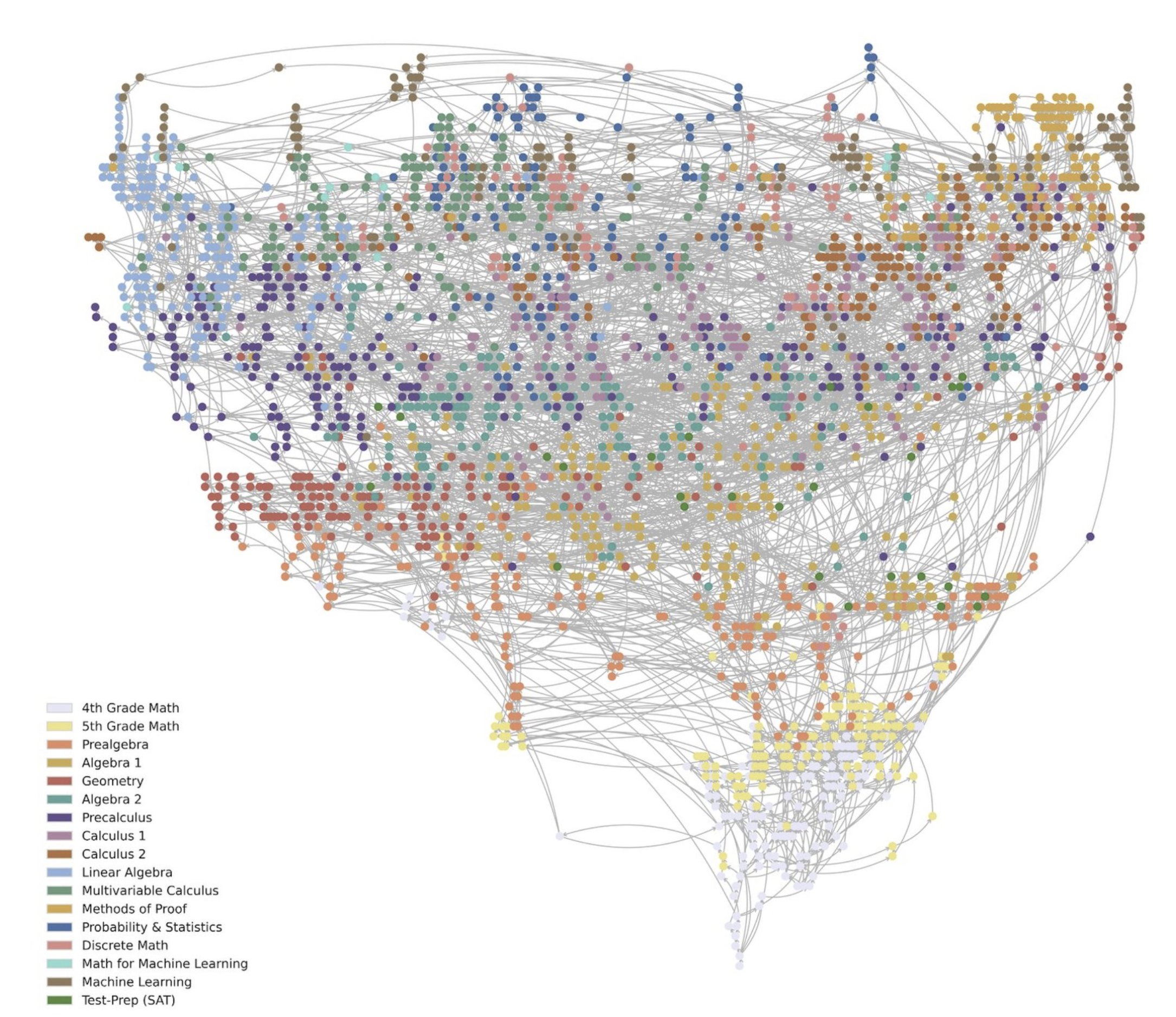
Every colored dot is a topic, and every line connecting them is a prerequisite relationship.
My son looked at the screen and said, "So it's like a map of how everything in math connects in my brain."
Yes, little man. That's exactly what it does.
My oldest already gets what I do. But for the younger two, I think that was something of a breakthrough.
I recently wrote about these structures in "Complete Context Graphs and Why Memory Needs to Forget," where the architecture maps the same way whether you are building a brand's digital presence or a student's mathematical knowledge.
Neither child asked what a knowledge graph is. Neither needed a lecture on generative AI. They just used the tools, in the ways that made sense to them. Comics and Calculus.
Last week in "Respect the Tool," I wrote about using AI with intention rather than lazily. Both of these efforts of my kids qualified in my opinion.
I know about the article in MIT Media Lab that says AI makes us lazier.
But Harvard Business Review says the opposite (somewhat).
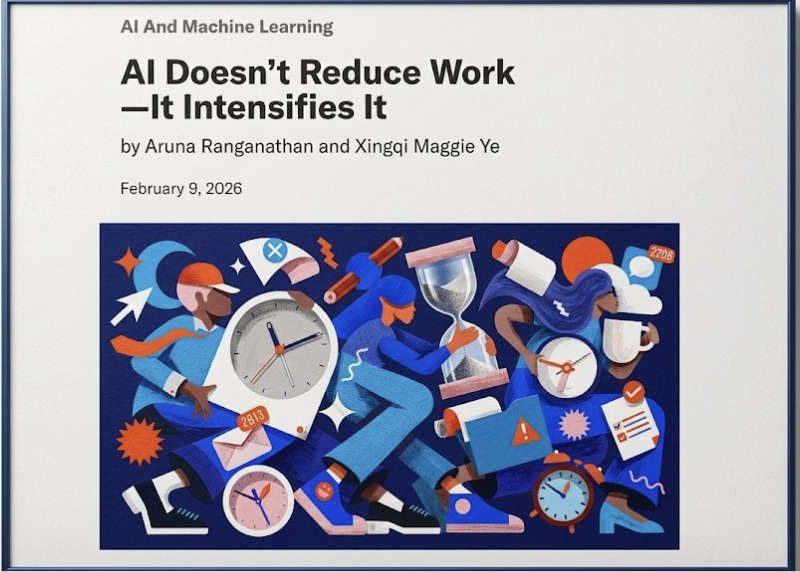
HBR found that AI is intensifying our efforts and I really saw that with my kids. I also saw it in London this week while meeting with dozens of clients and partners. We are all working harder, not less, because we are all still learning how to ride this bicycle.
Both experiences for my kids were active, directed, and effortful. They could be using these tools to cheat, but instead, it's driving them forward with intense intentions.
Both platforms blew my mind.
My guess is that this is where education goes very quickly. You should seriously consider Math Academy.
For years, my kids have known that I "work with data and AI."
This weekend, they saw what that actually means.
An interesting crossover from strictly business use of AI to something that impacts my family's life, education, and creative outlets.
Stay curious everyone. This stuff is just getting started.
Get More Where This Came From
Weekly AI frameworks and data strategy for people who have to make the call.


